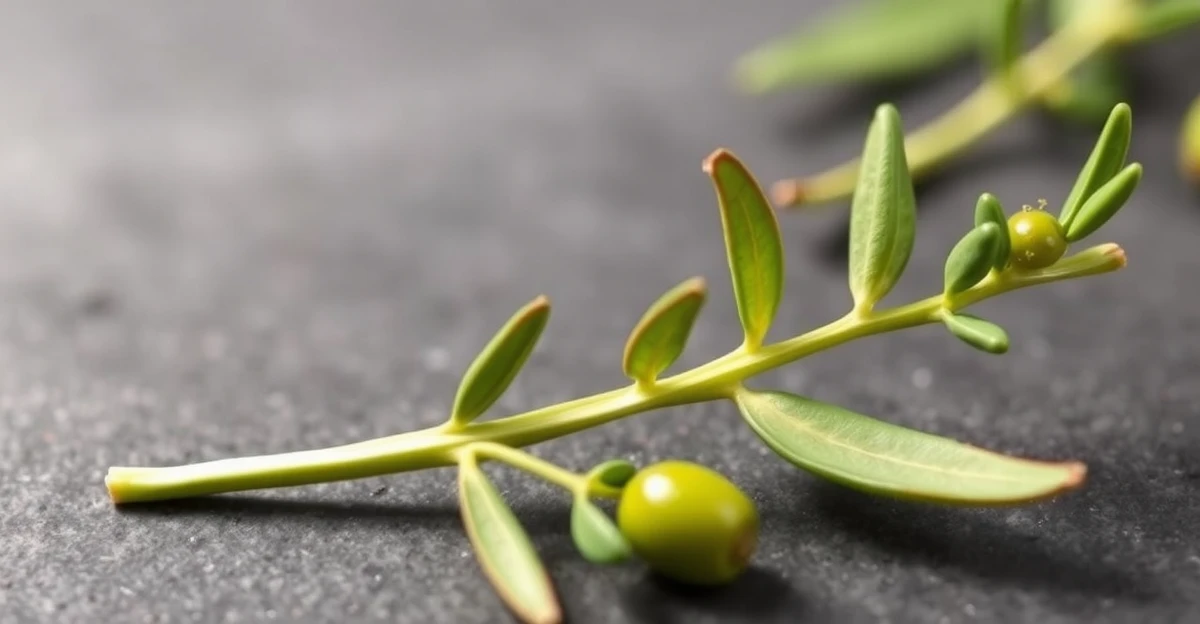
Ten years at number one and still not moving. The story behind the least surprising result in British statistics.
The Office for National Statistics published its 2025 baby names for England and Wales this morning, and — to the surprise of absolutely nobody — Olivia is top of the girls' chart once again. That makes ten straight years at number one.
Olivia has been in the top three girls' names every year since 2006, but its dominance came in two acts. It first reached number one in 2008 and held it through 2010, then spent five years as runner-up while Amelia took the crown. In 2016 it reclaimed the top spot and simply hasn't let go — a full decade now, which you can follow climb by climb on our Olivia popularity page. Ten unbroken years is not how baby names usually behave. Most take their turn near the top and then quietly move along. The streak is second only to the boy's name Jack, which took the number 1 spot for 13 years from 1996 to 2008.
Where the name comes from
Olivia comes from the Latin oliva, meaning olive. The olive branch has stood for peace and reconciliation since antiquity, so the name carries a gentle, faintly diplomatic set of associations without ever having to try. It is the sort of meaning parents are pleased to discover after deciding upon the name.
The name's modern life, though, owes almost everything to Shakespeare. He gave the name to the wealthy, grieving countess in Twelfth Night around 1601, and before that it was genuinely rare. So a name that now reads as the very definition of a safe, classic choice began, four hundred years ago, as something close to a literary invention. Every era gets the classics it deserves; ours inherited this one from a comedy about mistaken identity.
The quiet part: number one is smaller than it sounds
Here is the detail the headlines tend to skip. Even as the nation's favourite girls' name, Olivia is given to far fewer babies than the top boys' name, Muhammad. Last year the split was 2,761 Olivias to 5,721 Muhammads — more than twice as many — and that gap holds year after year. Olivia isn't fading. The reason is structural.
Girls' names spread across a much wider field than boys' names do. In a single year the ONS records around 35,000 different girls' names and spellings, against roughly 29,560 for boys. Parents naming a daughter are choosing from a bigger, more fragmented crowd, so the winner takes home a thinner slice. Put plainly: the nation's favourite girls' name is given to well under one per cent of the girls born.
How to say it, and what to shorten it to
It's oh-LIV-ee-ah — four syllables that essentially everyone can spell on the first attempt, which is half the appeal. What keeps it flexible is the range of shorter forms hiding inside it. One name, several personalities.
Nicknames and short forms
Liv — Brisk and modern, and now the default shortening
Livvy — Softer and sillier, ideal for a small child
Olive — The vintage full name tucked inside, increasingly worn on its own
Ollie — Shared with Oliver; the unisex option
Via — Rare, continental, quietly elegant
Vivi — A playful stretch, more common abroad than here
Why it has lasted
The secret to Olivia is that it refuses to commit to anything. Soft without being frilly, classic without being fusty, feminine without insisting on it. It suits a toddler, a teenager and a High Court judge equally well, which is more than most names manage. It carries no spelling debate, no pronunciation trap, and no unfortunate playground rhyme. In an age of invented spellings and one-of-a-kind names, Olivia's sheer unobjectionability is its superpower — it is the name nobody argues about.
Names in the same family
If you love the sound but would rather not join the largest club in the playground, these sit close by — and there's a fuller set on the names like Olivia page.
Related names to consider
Olive — The older, plainer parent name, now vintage-chic in its own right
Livia — The Roman original, having a quiet, understated moment
Liv — Increasingly chosen as a full name, not just a shortening
Olivette — French, frillier, considerably rarer
Ottilie — A different root entirely, but the same soft, vintage register
Alivia — A US-style respelling; distinctive, but approach with caution
So the headlines wrote themselves this morning, as they have every July for a decade. The genuinely interesting thing about Olivia was never that it's popular — it's that it has stayed on top for ten years in a market that changes its mind about everything else. The only open question is whether it can make eleven, or whether 2026's parents finally fancy a change.
Last updated: 9th July 2026
Common questions
What does the name Olivia mean?
Olivia comes from the Latin oliva, meaning olive. The olive branch is a long-standing symbol of peace. The name was popularised in English by Shakespeare, who used it in Twelfth Night around 1601.
How long has Olivia been the most popular girls' name in England and Wales?
Olivia has topped the ONS girls' chart every year since 2016 — ten years in a row as of the 2025 figures — and has been in the top three every year since 2006. It first reached number one back in 2008.
What are the common nicknames for Olivia?
Liv is now the usual shortening, with Livvy, Olive, Ollie and Via all in regular use. Olive in particular is increasingly given as a full name rather than a nickname.
Is Olivia too popular to use?
It depends how you feel about company. Although it is number one, Olivia is still given to well under one per cent of baby girls, so a class of thirty is unlikely to contain two of them. Popular is not the same as everywhere.
 Masterpiece Generator